Give each miss the right name
A shot that does not score in That Freekick Challenge can fail in several different ways. It can strike the wall, travel wide, go high, meet another obstacle, or reach the goalkeeper. Name the actual outcome before changing your setup. If the ball missed to one side, a target correction is worth testing; if it hit a defender, you have a route problem; if the keeper saved it, you reached the goal but chose a covered lane.
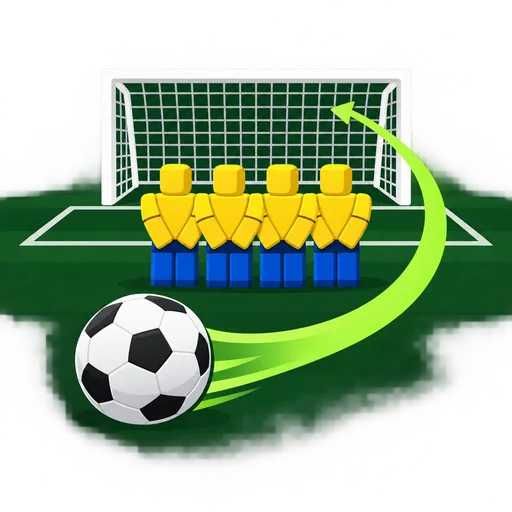
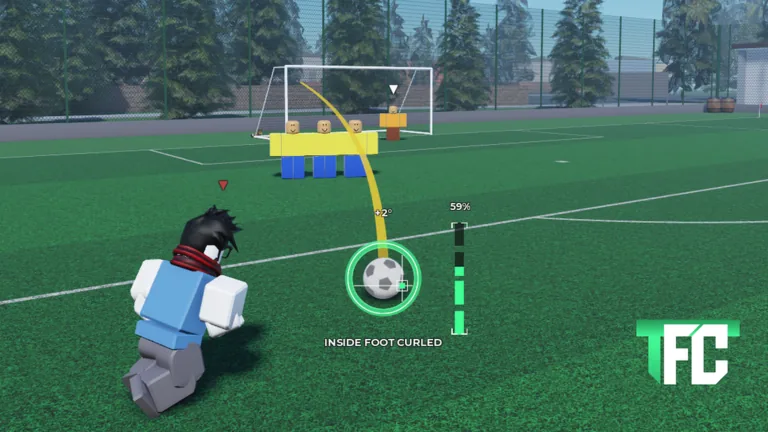
The official game images show a curved trajectory guide, angle readout, percentage meter, defensive wall, and keeper. Use those visible tools to make your next attempt purposeful. The images do not publish a shot-physics formula, so a fixed “perfect” power or angle would be a guess.
Work backward from the result
| Result | Main question | Next test |
|---|---|---|
| Wide of the post | Did the displayed route end outside the frame? | Move the target toward the goal in a small step. |
| Above the crossbar | Was the meter higher than on a closer attempt? | Try a lower value from the same setup. |
| Into the wall | Did the route intersect the defenders? | Change the path around the wall. |
| Into an obstacle | Where did the first collision occur? | Replan the path before the wall or simplify the setup. |
| Saved | Was the goalkeeper covering the target? | Choose another reachable area of the goal. |
These are experiments, not guaranteed fixes. A high miss can involve more than power, but a controlled lower-power attempt tells you whether that variable helped. An on-target save can involve keeper movement, but a different target lane tests a clearer idea than changing every setting simultaneously.
Compare two shots fairly
Repeat from the same ball position with the same wall and target arrangement. Before shooting, note the selected shot type, angle, and meter percentage. Afterward, change one setting that matches the diagnosis. If the result improves, repeat the new setup once more before making a larger change.
For example, if your first shot goes wide after curving around the wall, keep enough curve to clear the defender and bring the endpoint back toward the frame. If your second shot reaches the goal but the keeper saves it, the wall correction worked. Your next problem is the target lane, not the wall. This way a miss can still tell you what to keep.
A public TFC player duel shows participants reacting to missed shots and goalkeeper saves under a countdown. That pressure makes it tempting to over-correct. The best preparation is to learn this short diagnosis during untimed practice, so you can make a small change quickly during a turn.
Avoid the two biggest guessing traps
First, do not interpret every non-goal as a power shortage. If the shot is already going high or wide, more power may make the comparison harder to read. Second, do not copy an angle from an unrelated setup. The same displayed value can face a different wall, goalkeeper position, or obstacle arrangement.
Treat the trajectory guide as a planning reference and the actual ball as feedback. The preview helps you decide where to aim; the result tells you whether that decision worked in the current setup. Keep those two observations together when refining a shot.
FAQ
Why does a curled shot go wide?
Its path can clear the wall but finish beyond the post. Recheck the endpoint and make a smaller target correction.
Should I lower power after a high miss?
It is a clean next test if you keep the rest of the setup steady. No universal value is documented.
Does a goalkeeper save count as a miss?
It is a non-goal, but it differs from an off-target shot. Try a different reachable lane rather than diagnosing a wide miss.
Can extra obstacles cause the problem?
Yes, an official image shows objects in a shot setup. Identify the first contact point before changing the wall or target plan.