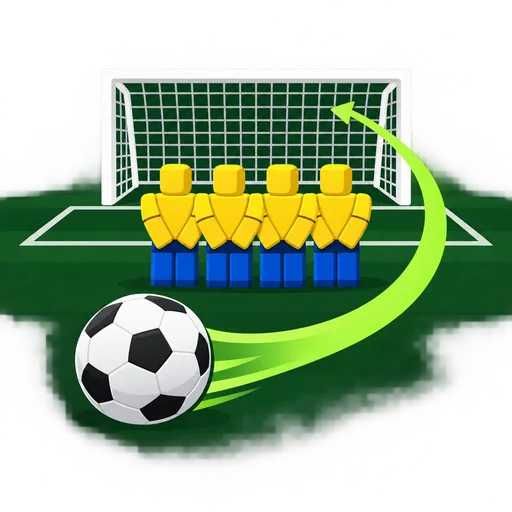
Check the wall crossing first
If your That Freekick Challenge shot hits the defensive wall, look at the yellow trajectory guide where it passes the defenders. A path that crosses the wall is a route problem before it is a power problem. Move the route toward visible open space, then confirm that it still reaches the goal. This one check is more useful than raising the meter after every block.
The game’s official images show a yellow-and-blue wall between the ball and goal. One image shows a curled route bending around its outside edge. Another shows a shot setup with the angle and percentage display visible. Those elements let you diagnose a block without inventing a secret wall-collision formula.
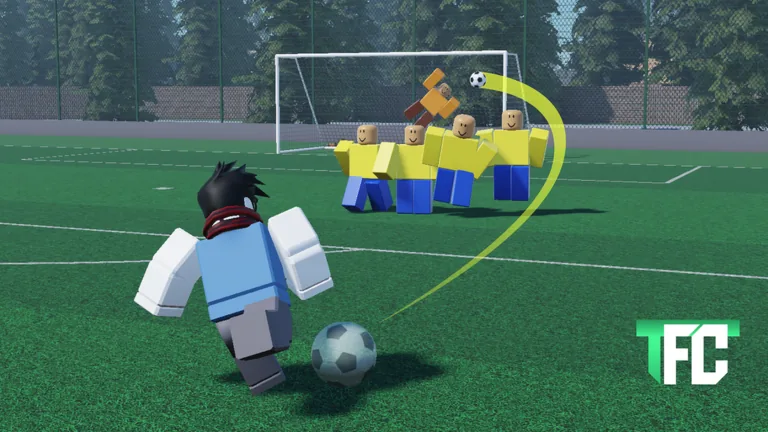
Three common route problems
The guide runs through a defender. Move the projected path around the wall before changing other settings. If you are selecting a curled shot, inspect the whole arc, not only its endpoint.
The guide barely clips the outside edge. Leave more visible clearance. A route that looks almost open can still be difficult to repeat. A small extra margin is easier to evaluate than a dramatic turn away from the goal.
The path clears the wall but misses wide. You have solved the first problem and created a second. Bring the target back toward the frame in a smaller step. Avoid returning all the way to the original blocked path.
| First result | Next controlled attempt |
|---|---|
| Direct wall hit | Move the route around an outside defender. |
| Edge contact | Add a little more visible clearance. |
| Clear but wide | Shift the endpoint toward the goal. |
| Clear and saved | Choose another reachable lane around the keeper. |
This sequence distinguishes a useful correction from a random setting change. Every new shot should answer a question about the previous one.
Keep the rest of the setup stable
Practice from the same ball position with the same wall arrangement for two or three attempts. Note the shot type, angle readout, and power percentage before the first shot. For the second, change the route while keeping the other values close. If the ball now clears the wall, you know the correction moved in the right direction.
When the arrangement changes, start again. TFC is described by its developer as a customizable freekick sandbox. A wall in another location creates a new geometry problem. Reusing a degree number from a different setup is less reliable than reading the current wall and guide.
A public player duel includes a ball ricocheting off defenders. That recording is a reminder to judge the actual contact, not only the intended shot. Under a timer, use a known route and make one small visible change instead of swinging between extreme values.
What if an obstacle is in front of the wall?
An official TFC image includes additional field objects. If a barrel, brick structure, or another obstacle intercepts your shot before the wall, solve that first. Follow the path from ball to goal in order; do not diagnose a wall problem when the ball never reached the wall. Simplify the layout during practice if the current setup makes the first collision hard to identify.
FAQ
Does more power let a shot pass through the wall?
No such rule is documented. If the trajectory crosses a defender, test a route change first.
Is a curved shot enough to clear the wall?
Only when its visible path actually passes the wall and still leads to the goal. Check both parts before kicking.
Why did my correction go wide?
You moved around the wall but sent the endpoint outside the posts. Make a smaller target correction back toward the goal.
What should I record after a blocked attempt?
Note the first contact point, current route, angle, and meter reading. Change one setting for the next attempt.