Start with one repeatable shot
Open That Freekick Challenge on Roblox, complete the opening instructions, and take a few shots from the same setup before changing anything. TFC is a freekick sandbox: the point is to customize a free kick and challenge other players. Your first goal is to learn what one adjustment does, not to find a magic setting that works from every position.
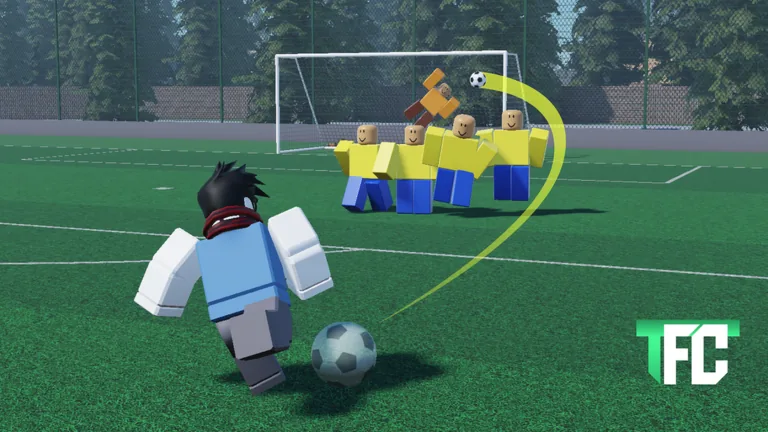
Look at the wall, goalkeeper, goal mouth, curved trajectory line, and percentage meter before you kick. Those elements are visible in the game’s own images. They give you enough information to make a deliberate first attempt, then compare what actually happened with the route you expected.
Read the setup before you shoot
The wall is your first obstacle. A path that runs directly through it gives you little room for error. The goalkeeper is the second problem: clearing the wall alone does not mean the goal is open. Plan a lane that reaches the goal without asking the ball to do two contradictory things at once.
The official screenshots also show a shot labeled INSIDE FOOT CURLED, a curved yellow guide, angle numbers, and a vertical percentage display. Treat those as separate pieces of feedback. The guide shows the route you are setting up; the percentage gives you a comparable power setting; the angle display helps you remember how much you changed. A preview line is useful, but the actual shot is the test.
| What you see | First question to ask |
|---|---|
| Defensive wall | Does my planned path clear it? |
| Goalkeeper | Where is the open part of the goal? |
| Curved guide | Does the bend move toward my target? |
| Power percentage | Can I compare this attempt with the last one? |
| Obstacles | Did one interrupt the path before the goal? |
Use a three-attempt learning loop
For attempt one, choose a simple target lane and note the displayed angle and power. If the shot hits the wall, keep your power similar on attempt two and adjust the path away from the wall. If it clears the wall but misses wide, keep the same general path and make a smaller aiming correction. If the goalkeeper saves it, pick a different reachable target rather than changing every setting at once.
Attempt three tests whether your correction worked. This sequence is useful because it separates a blocked shot from a wide shot and a saved shot. Those outcomes call for different decisions. A random new setup every time makes improvement hard to measure.
You can also build a practice challenge from the obstacles visible in one official image. Start with a clear wall-and-goal shot, then add complexity only after you can describe why your previous attempt missed. The game calls itself a sandbox, so experimenting with the arrangement is part of the appeal; the exact options available in your current menu are the ones to trust.
Move into player challenges
TFC’s official description says you can challenge other players. A public gameplay recording shows two friends taking turns in a timed one-versus-one exchange. Use a duel to check whether your practice method survives pressure: decide on a target, glance at your settings, and commit instead of making a last-second series of unrelated changes.
The recording is a player example, not a complete rulebook. Check the live in-game interface for current invitation steps and any mode-specific rules. If you have only a short turn, one familiar setup is usually a better starting point than experimenting with an unfamiliar shot under a countdown.
FAQ
What is That Freekick Challenge?
It is a Roblox freekick sandbox where players customize shots and challenge other players.
Is there one best power percentage?
No universal value is established by the official game description or images. Compare attempts from the same setup and adjust from the result.
Why did my shot hit the wall?
Your planned route or the actual ball path crossed the defensive wall. Recheck the guide and change one aiming variable for the next attempt.
Should I start with a player duel?
Take a few repeatable practice shots first. A duel is more useful once you know how to correct a miss without guessing.