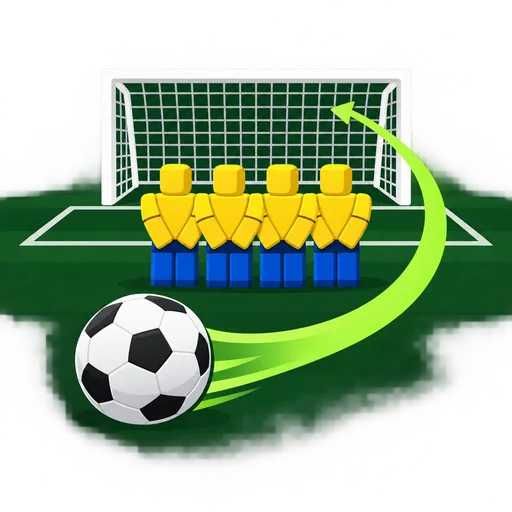
Build the drill around one shot
Start a That Freekick Challenge practice session by choosing one visible wall-and-goal setup. Shoot from it three times without changing the arrangement. The first attempt gives you a baseline; the next two test one correction each. This is a player-made routine for the game’s customizable sandbox, not a claim that the menu contains an official mode with this name.
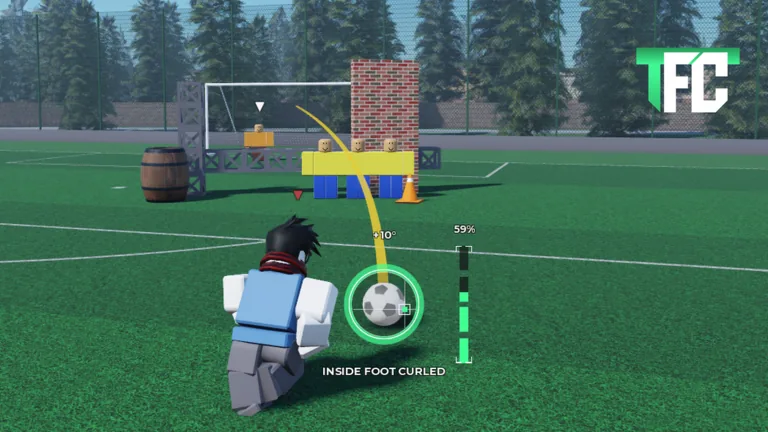
TFC’s official screenshots show a curved trajectory guide, defensive wall, goalkeeper, angle value, power percentage, and even an arrangement with extra obstacles. These are enough to give your practice a clear purpose. You do not need to know a hidden physics formula to learn whether a changed route clears the wall more reliably.
The ten-shot routine
| Shots | Focus | What to record |
|---|---|---|
| 1 to 3 | Keep the setup the same. | Did the ball hit the wall, miss, get saved, or score? |
| 4 to 6 | Adjust the path around the wall. | Did the wall stop fewer attempts? |
| 7 to 8 | Try a different reachable target area. | Was the goalkeeper better placed to save it? |
| 9 to 10 | Revisit power from the same position. | Did the result move closer to the intended target? |
The numbers describe a convenient training structure, not an official game objective. If a change makes a shot worse, return to the last useful baseline. Do not keep adding angle and power simply because the previous attempt failed; first identify what failure you are trying to fix.
For a quick session, cut the routine to four shots: baseline, route change, target change, and repeat. The important part is that each attempt answers a different question. A session of random kicks can be fun, but it cannot tell you which adjustment helped.
Add obstacles only after the basic route works
One official image shows a barrel, brick structure, cone, and wall near the goal. Those objects provide an obvious way to make a shot more demanding. First practice a route with the normal defensive wall. Then use a setup that includes an additional obstacle, if your current game options allow it. Look at the trajectory before you kick and check where the ball actually makes contact.
Avoid guessing that each obstacle has a special point value or a specific collision rule. The screenshots show that these objects exist in a setup; they do not document a scoring system for them. Your goal in practice is simpler: reach the goal along a path you chose, then understand why a different path failed.
Use the same language after every shot
Say the result in a few words: “wall first,” “wide right,” “high,” “saved,” or “goal.” The label directs the next test. If you hit the wall, change the route. If you miss wide, move the target back toward the frame. If the goalkeeper saves it, try another lane. If you score, repeat once before assuming you have a dependable shot.
In a recorded TFC duel, players change power under time pressure and react to surprise saves. A practice routine removes that pressure long enough to learn a baseline. When you return to a player challenge, you can recognize a familiar problem quickly and spend your limited turn on one useful correction.
FAQ
Is this an official training mode?
No. It is a repeatable routine you can apply to the game’s customizable free-kick sandbox.
How many settings should I change between shots?
Start with one. Changing several settings at once makes it difficult to tell what caused the new result.
Should I practice with obstacles immediately?
Learn a basic wall-and-goal shot first, then add obstacles when you can describe your misses clearly.
Is a scored shot enough to prove a setup works?
Repeat it from the same arrangement. A repeatable route is more useful than a single surprising goal.